Marble Testing Services in UAE: Ensuring Quality, Strength, and Durability
Marble is a premium natural stone widely used in residential, commercial, and hospitality projects across the UAE. Its elegant appearance, natural patterns, and durability make it a popular choice for flooring, wall cladding, countertops, staircases, and decorative architectural elements. However, marble properties can vary depending on its mineral composition, porosity, geological formation, and surface finish. Professional Marble Testing Services in UAE help manufacturers, suppliers, contractors, architects, and developers evaluate marble quality and determine its suitability for specific applications.
At Duroscope Testing Laboratory LLC, marble testing supports the assessment of important physical and mechanical properties. These evaluations help businesses make informed material-selection decisions, maintain quality standards, and assess whether marble meets applicable project specifications.
What Are Marble Testing Services?
Marble testing involves evaluating the physical characteristics, strength, absorption properties, and durability of natural marble stone. These assessments provide information about how marble may perform under specified conditions and whether it is suitable for its intended use.
In the UAE, marble is frequently used in luxury interiors, commercial buildings, hotels, villas, and public spaces. Testing helps assess the consistency and performance of marble supplied for these projects, supporting quality control and material verification.
Key Marble Testing Services in UAE
Marble Density Testing
Density is an important physical property that can help characterize marble and assess consistency between stone samples. It is related to the stone's composition and internal structure.
Marble density testing measures mass relative to volume under specified conditions. The results can support material identification, product comparison, and quality assessment for natural stone used in construction and decorative applications.
Density information is particularly useful when evaluating marble for flooring, cladding, countertops, and other architectural installations where material properties influence design and handling.
Marble Water Absorption Testing
Water absorption indicates how much water marble can absorb under specified test conditions. The result is influenced by the stone's porosity, mineral composition, and internal structure.
Water absorption testing helps assess marble's suitability for applications where exposure to water, moisture, or cleaning activities is expected. It is especially relevant for bathrooms, kitchens, flooring, exterior cladding, and other moisture-exposed areas.
Understanding absorption characteristics helps project professionals choose suitable stone and finishing systems. However, water absorption results should be considered alongside installation methods, sealing requirements, and environmental exposure.
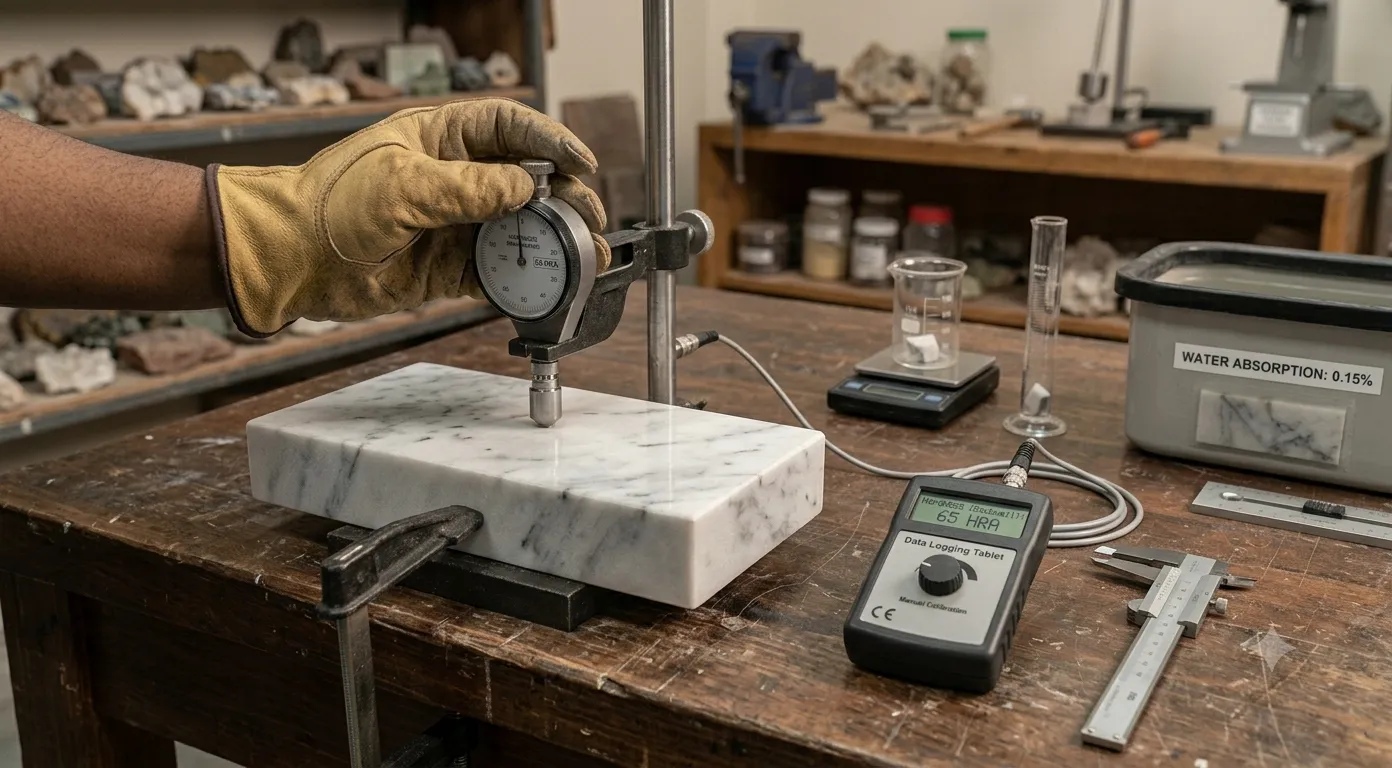
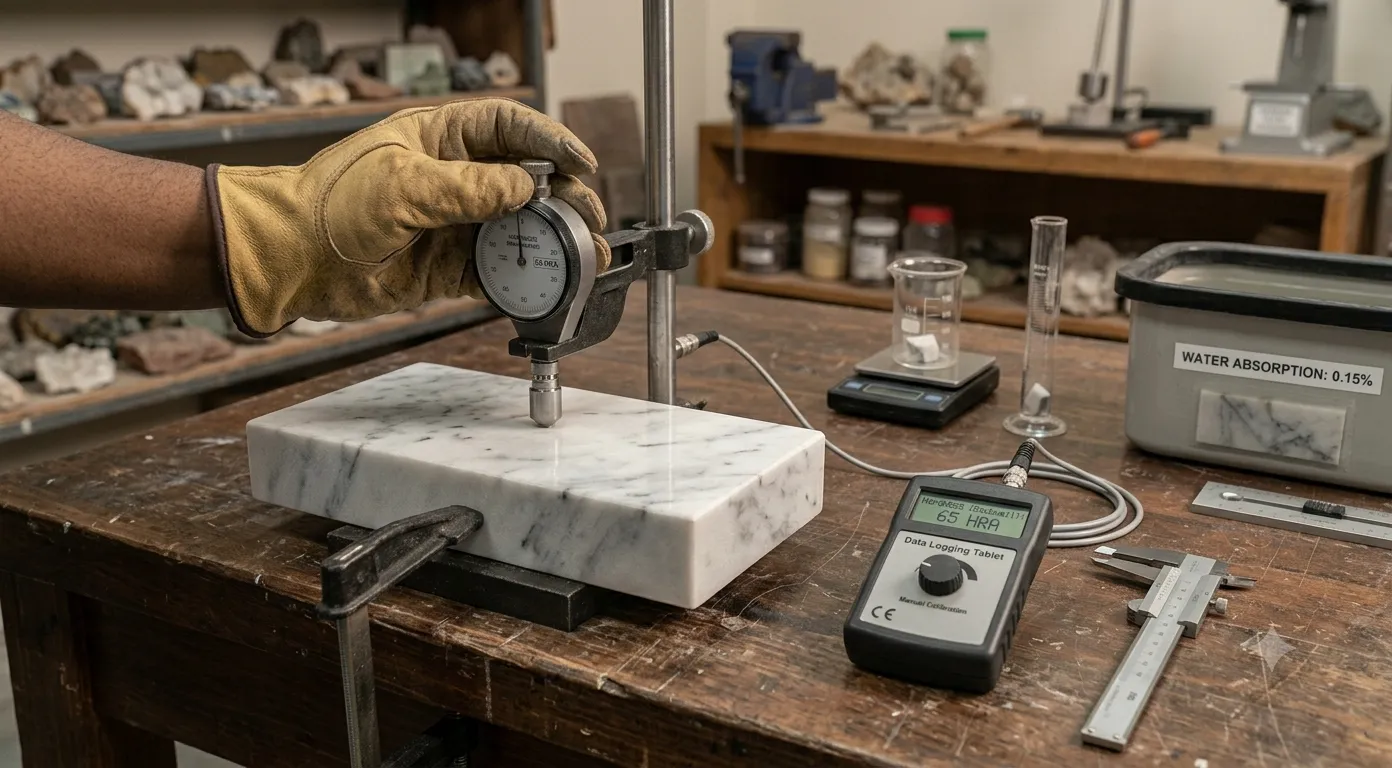
Marble Hardness Testing
Hardness relates to a material's resistance to scratching, indentation, or surface damage, depending on the test method used. Marble hardness can vary according to its mineral composition and geological characteristics.
Hardness assessment helps characterize the stone and evaluate its suitability for different decorative and architectural applications. It can also provide useful information when comparing stone varieties and considering surface finishing requirements.
Since marble is a natural stone with variable mineral composition, hardness results should be interpreted using an appropriate method rather than assuming that every marble type has the same performance.
Marble Compressive Strength Testing
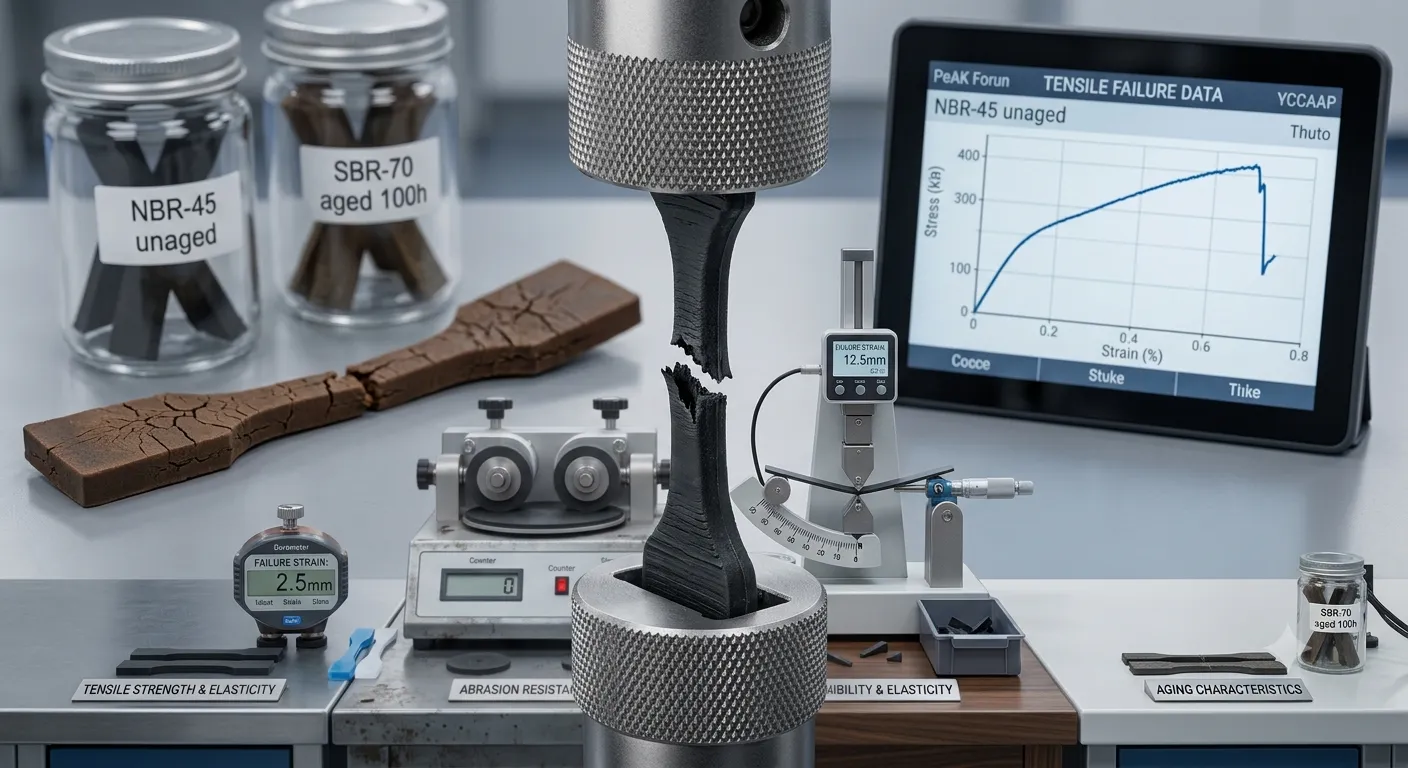
Compressive strength is an important mechanical property that describes a material's ability to withstand compressive loads before failure.
Marble compressive strength testing evaluates the stone's response to specified loading conditions. The results help engineers, contractors, and material suppliers assess its mechanical characteristics for construction and architectural applications.
This assessment may be relevant when selecting marble for flooring, structural stone elements, and other applications where load-bearing performance is a consideration. Actual suitability depends on the stone's measured properties, design requirements, installation details, and applicable specifications.
Marble Flexural Strength Testing
Marble used in slabs, panels, and cladding systems may experience bending stresses during handling, installation, or service. Flexural strength testing evaluates the stone's resistance to bending under defined conditions.
The results help assess the mechanical performance of marble panels and support material selection for applications where bending behaviour is important.
Flexural testing can be particularly useful for evaluating marble intended for wall cladding, decorative panels, and other installations subject to specified mechanical demands.
Marble Abrasion Resistance Testing
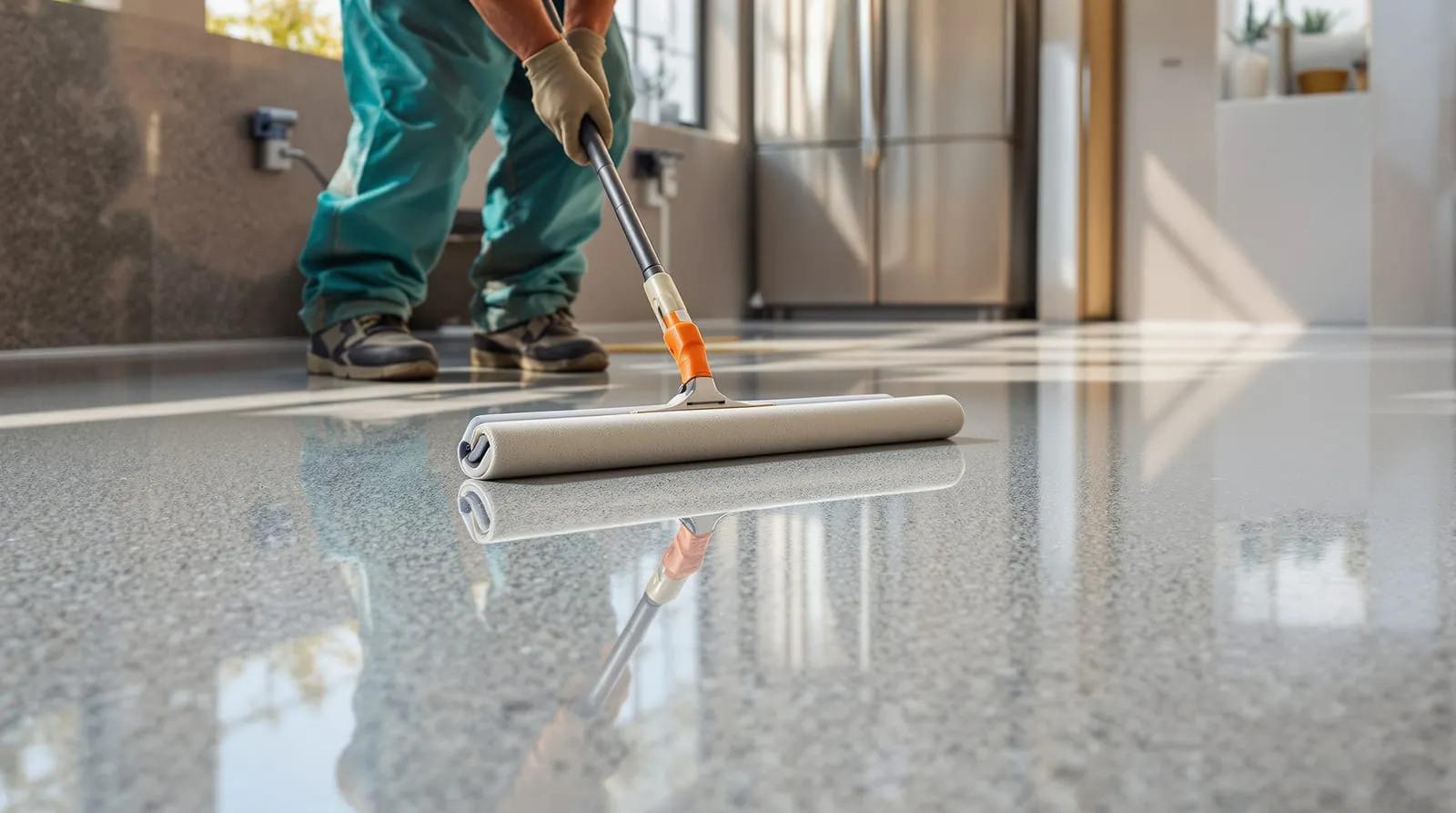
Marble flooring and frequently used surfaces may experience wear caused by foot traffic, cleaning, and contact with objects. Abrasion resistance testing evaluates how the stone surface responds to wear under specified test conditions.
This assessment can help compare marble varieties for flooring and other surfaces where appearance and wear performance are important.
The appropriate testing method depends on the marble type, intended application, and relevant project specifications.
Marble Quality and Surface Inspection
Natural marble may contain variations in colour, veining, mineral distribution, and visible characteristics. Surface inspection helps assess whether the stone meets the appearance and quality requirements specified for a project.
Depending on the inspection scope, assessments may include:
- Visible cracks and surface defects
- Veining and natural variations
- Surface finish and polish quality
- Edge condition and visible damage
- Thickness and dimensional consistency
- Differences in appearance between supplied slabs or tiles
These inspections support quality control before fabrication, installation, and final acceptance.
Why Is Marble Testing Important?
Professional marble testing provides valuable information about natural stone quality and performance. Key benefits include:
- Quality verification: Helps assess marble properties against specified requirements.
- Material selection: Supports choosing suitable stone for particular construction and decorative applications.
- Strength assessment: Provides information about mechanical properties under defined test conditions.
- Moisture evaluation: Helps determine the stone's water absorption characteristics.
- Durability assessment: Supports evaluation of properties relevant to wear and long-term use.
- Product consistency: Helps compare samples and supplied materials.
- Project quality assurance: Provides technical results that can support procurement and construction decisions.
Because marble is a natural material, properties can vary between quarries, blocks, slabs, and batches. Testing helps establish a more reliable basis for evaluating that variation.
Applications of Marble Testing
Marble testing is relevant to a wide range of construction and design applications, including:
- Residential villas and apartments
- Commercial buildings and office interiors
- Hotels and hospitality projects
- Flooring and staircases
- Wall cladding and decorative panels
- Kitchen countertops and vanity tops
- Public buildings and architectural spaces
- Natural stone fabrication and supply
- Imported marble quality inspection
Different applications may require different combinations of tests. For example, marble used for flooring may require attention to abrasion and surface performance, while cladding panels may require greater emphasis on relevant mechanical properties and installation requirements.
Marble Testing Standards and Compliance in UAE
Marble testing should follow suitable recognized methods selected according to the stone type, required property, and intended application. Relevant methods may include applicable ISO, EN, ASTM, or other recognized natural stone testing standards.
The required tests and acceptance limits should be confirmed against the project specification, material classification, and applicable regulatory requirements. A laboratory test report documents the properties assessed under the specified conditions; it does not automatically establish compliance with every construction or installation requirement.
Why Choose Duroscope Testing Laboratory LLC?
Selecting an appropriate testing laboratory is an important part of natural stone quality assessment. Duroscope Testing Laboratory LLC supports construction material evaluation with a focus on technical assessment, quality-oriented procedures, and dependable reporting.
Our approach emphasizes:
- Quality Excellence: Supporting consistent evaluation of material properties.
- Technical Assessment: Helping identify appropriate tests based on marble type and project requirements.
- Quality Assurance Support: Assisting businesses in evaluating materials against applicable specifications.
- Customer-Focused Service: Supporting suppliers, contractors, architects, importers, and project developers.
- Informed Decision-Making: Providing test results that help customers assess material quality and suitability.
Contact Duroscope Testing Laboratory LLC to discuss your marble testing requirements and confirm the appropriate testing scope for your natural stone products or construction project.
Conclusion
Marble quality plays an important role in the appearance, performance, and durability of architectural and construction projects. Evaluating density, water absorption, hardness, compressive strength, flexural strength, and surface quality helps businesses understand the properties of marble before selecting or installing it.
Professional Marble Testing Services in UAE support quality control, material verification, and informed decision-making for natural stone applications. Duroscope Testing Laboratory LLC helps customers assess relevant marble properties in line with applicable testing methods and project specifications.