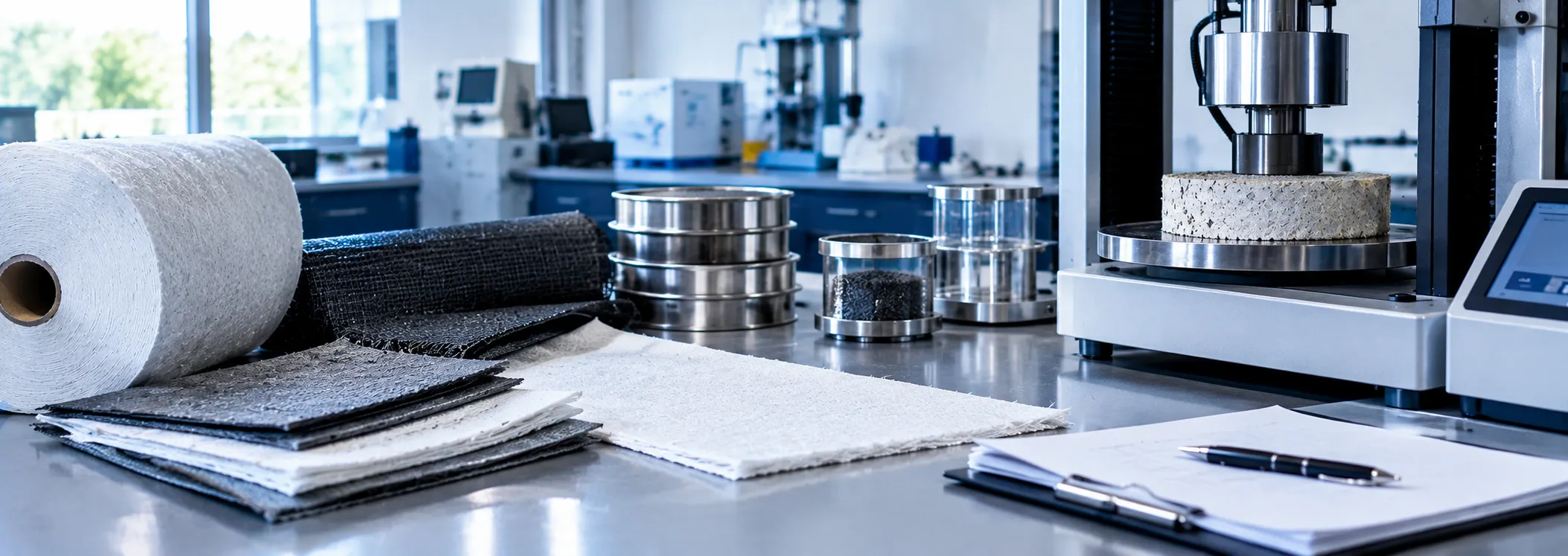
Fabric and Geotextile Material Testing Services in UAE
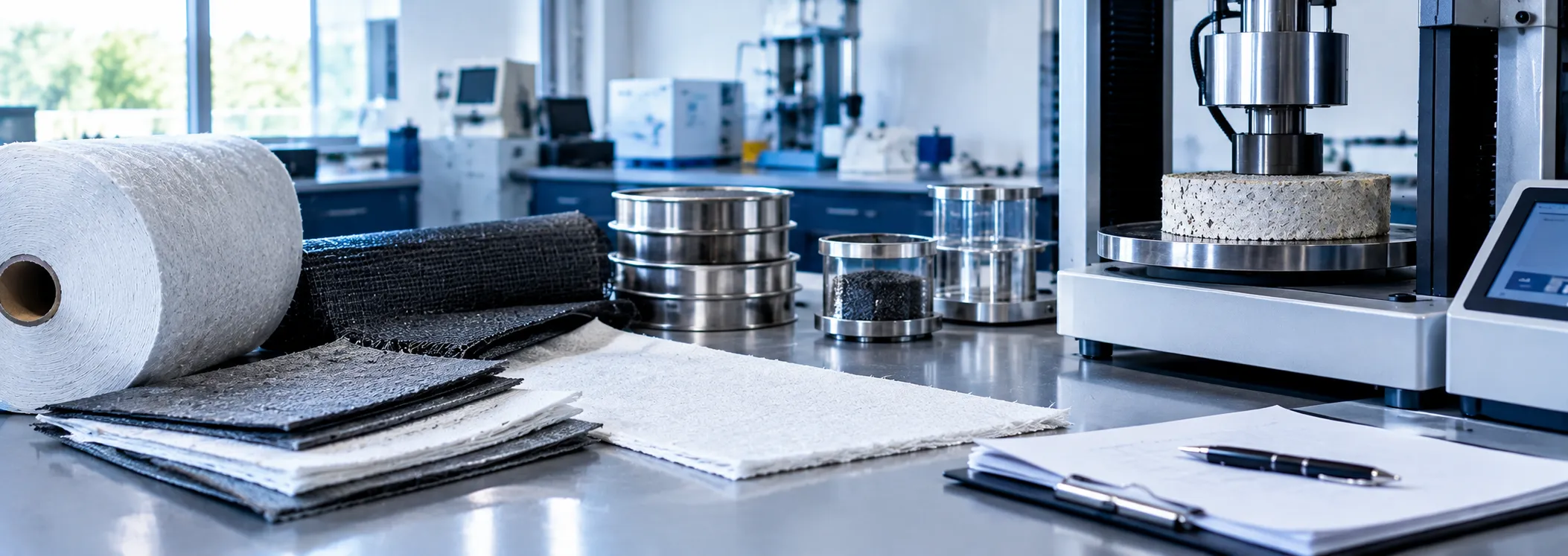
Fabrics and geotextiles play an important role in modern construction, infrastructure development, landscaping, drainage systems, and soil reinforcement. These materials are designed to provide separation, filtration, drainage, reinforcement, and protection in a wide range of engineering applications. Fabric and Geotextile Material Testing Services in UAE help manufacturers, suppliers, contractors, and project engineers evaluate material strength, permeability, puncture resistance, and durability to determine whether products meet specified performance requirements.
In the UAE, where construction projects may involve demanding soil conditions, high temperatures, and challenging environmental exposure, selecting suitable geotextile and fabric materials is essential. Professional testing helps verify product properties, support quality control, and reduce the risk of material failure during installation or service.
Duroscope Testing Laboratory LLC supports material testing requirements for businesses seeking reliable information about the performance and quality of construction-related materials.
What Is Fabric and Geotextile Material Testing?
Fabric and geotextile testing involves assessing the physical, mechanical, and hydraulic properties of textile materials used in civil engineering, construction, and environmental applications.
Geotextiles are permeable textile materials commonly manufactured from synthetic fibres such as polypropylene or polyester. Depending on their design and intended use, they can separate soil layers, filter water, provide drainage, reinforce weak soils, or protect geomembranes and other construction materials.
Fabric testing may also cover woven and nonwoven materials used in construction, landscaping, erosion control, and other industrial applications.
Testing requirements depend on the material type, manufacturing process, installation conditions, intended application, and applicable project specifications.
Key Fabric and Geotextile Testing Services in UAE
Tensile Strength Testing
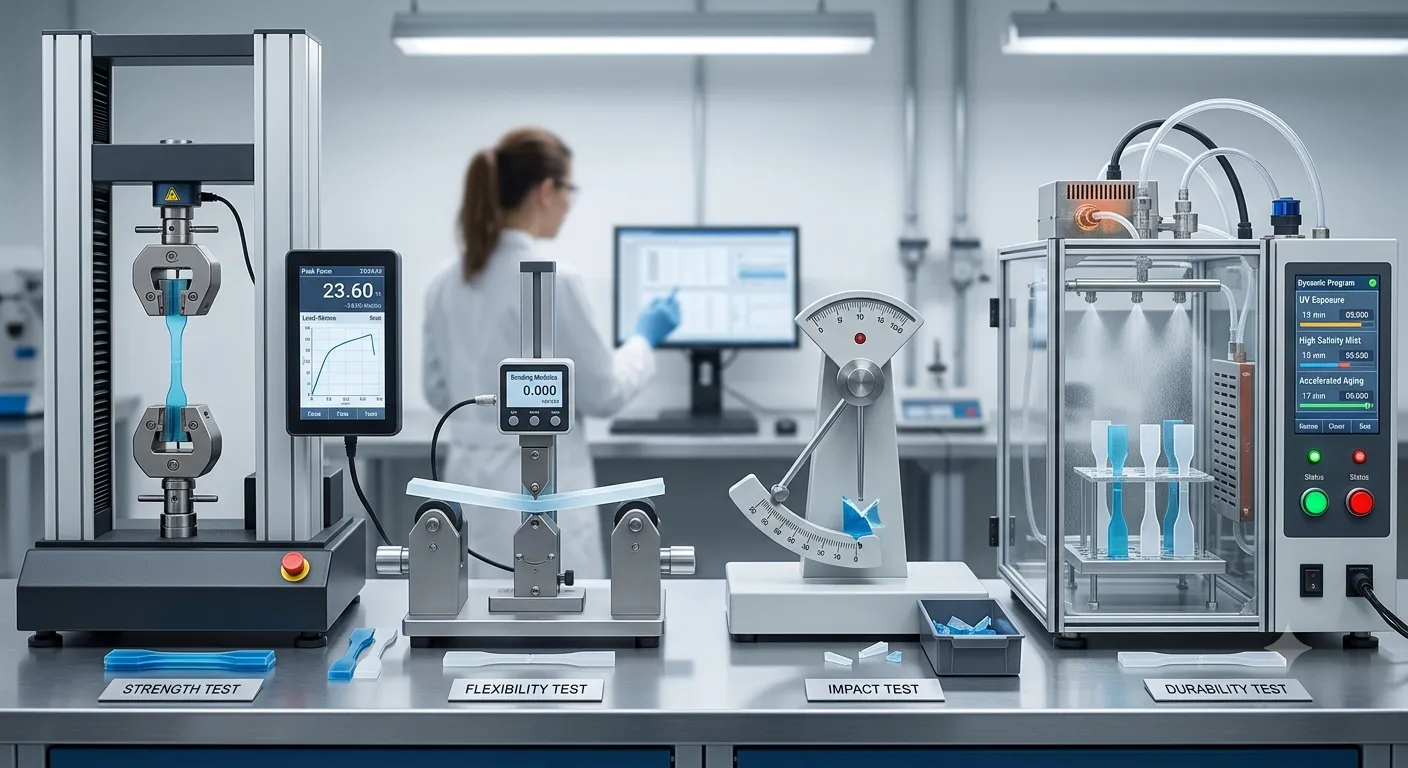
Tensile strength testing measures the force a fabric or geotextile can withstand when subjected to pulling forces. It helps evaluate the material's ability to resist tension during handling, installation, and service.
For geotextiles used in soil reinforcement, road construction, retaining structures, and embankments, tensile properties are important considerations when selecting materials for specific engineering requirements.
Testing may also evaluate elongation at break, providing information about how much a specimen stretches before failure.
Puncture Resistance Testing
Puncture resistance testing assesses a material's ability to withstand forces applied by sharp or concentrated objects. Geotextiles used in road foundations, drainage systems, landfills, and protective applications may encounter stones, aggregates, or uneven surfaces.
Evaluating puncture resistance helps engineers assess whether a material is suitable for the expected installation and service conditions.
The appropriate test method depends on the material and the type of puncture resistance being evaluated.
Permeability Testing
Permeability testing evaluates how readily water passes through a geotextile under specified conditions. This property is particularly important for filtration and drainage applications, where water must move through the material while soil particles are retained as required.
Geotextile permeability and related hydraulic properties help engineers assess suitability for drainage layers, retaining walls, road construction, and landscaping projects.
Depending on the intended application, testing may include water permeability normal to the plane or water flow capacity within the plane of the material.
Burst Strength Testing
Burst strength testing measures a fabric's resistance to pressure applied over a defined area until failure occurs. This property may be relevant to certain textile products that experience multidirectional loading.
The suitability of burst testing depends on the material structure and intended application. For many civil engineering geotextiles, tensile, puncture, or other specified mechanical tests may be more appropriate.
Tear Resistance Testing
Tear resistance testing evaluates the force required to continue or propagate a tear in a fabric or textile material. This information can help assess resistance to damage during handling, installation, and use.
Tear resistance is especially relevant when selecting fabrics that may be exposed to mechanical stress, sharp edges, or rough construction surfaces.
Thickness and Mass per Unit Area Testing
Thickness testing measures the material's thickness under specified conditions, while mass per unit area testing determines the weight of the fabric or geotextile over a defined surface area.
These properties help verify product consistency and compare supplied materials against technical specifications. They may also support the evaluation of filtration, separation, cushioning, and protective applications.
Durability and Environmental Resistance Testing
Geotextiles may be exposed to sunlight, temperature changes, chemicals, moisture, and mechanical stresses during storage, installation, or service. Durability testing can evaluate selected properties associated with resistance to these conditions.
Depending on the material and application, assessments may include ultraviolet exposure, chemical resistance, oxidation-related aging, or retained mechanical properties after conditioning.
The appropriate evaluation should reflect the expected service environment and relevant project requirements.
Seam Strength Testing
Some geotextile applications use stitched or otherwise joined material sections. Seam strength testing evaluates the strength of these joints under specified loading conditions.
This assessment can be important for large-area installations where joined sections must perform reliably under the expected stresses.
Soil-Geotextile Filtration and Related Hydraulic Properties
In filtration applications, a geotextile must allow water to pass while limiting the movement of soil particles according to the engineering design.
Relevant evaluations may include characteristic opening size, water permeability, and other application-specific hydraulic properties. These results help engineers select products for drainage, erosion control, and soil filtration systems.
Applications of Fabric and Geotextile Testing
Fabric and geotextile material testing supports a wide range of construction and infrastructure projects, including:
- Road construction: Geotextiles used for soil separation, subgrade stabilisation, and reinforcement.
- Drainage systems: Materials designed to filter water and help prevent soil migration.
- Landscaping: Geotextiles used in garden beds, retaining walls, and ground-management applications.
- Soil reinforcement: Materials used to improve the performance of selected soil structures.
- Erosion control: Fabrics and geotextiles used in suitable systems to help limit soil movement.
- Landfills and containment projects: Geotextiles used for protection, separation, and drainage around engineered containment systems.
- Railway and infrastructure projects: Geotextiles used in separation, filtration, and stabilisation applications.
- Construction protection systems: Textile materials used to protect membranes and other sensitive construction layers.
The required tests depend on the product's intended function and the technical specifications of the project.
Importance of Geotextile Testing in UAE
Geotextile performance is an important factor in the long-term reliability of civil engineering and infrastructure projects. Materials that do not meet specified requirements may be vulnerable to excessive deformation, installation damage, inadequate drainage, or premature deterioration.
Professional fabric and geotextile testing can help businesses:
- Verify tensile strength and elongation properties.
- Evaluate puncture and tear resistance.
- Assess water permeability and filtration-related characteristics.
- Check material thickness and mass per unit area.
- Evaluate selected durability and environmental resistance properties.
- Compare delivered products with approved specifications.
- Support construction quality assurance and supplier evaluation.
Testing provides valuable technical information, but product suitability must also be assessed against design calculations, installation requirements, site conditions, and relevant project standards.
Fabric and Geotextile Testing Standards
Fabric and geotextile materials may be tested using applicable ASTM, ISO, EN, or other recognised methods. The correct standard depends on the property being measured and the type of product under evaluation.
Examples include ASTM D4595 for wide-width tensile properties of geotextiles, ASTM D6241 for static puncture strength using a CBR plunger, and ASTM D4491 for water permeability of geotextiles by permittivity.
Other methods may be applicable to grab tensile strength, tear resistance, apparent opening size, thickness, mass per unit area, and durability.
The test method, specimen preparation, conditioning requirements, and acceptance criteria should be confirmed according to the relevant product specification and project requirements. Results from different test methods should not be treated as directly interchangeable unless technically justified.
Why Choose Duroscope Testing Laboratory LLC?
Selecting an appropriate testing provider helps construction professionals obtain useful data for material selection and quality control. Duroscope Testing Laboratory LLC supports businesses seeking material testing services for construction and industrial applications.
A professional testing approach can help clients:
- Assess specified material properties.
- Support supplier verification and product comparison.
- Identify potential material quality issues.
- Obtain test data for project documentation.
- Make informed decisions about material selection.
- Support quality-control procedures throughout construction projects.
Specific geotextile and fabric test availability, accreditation status, and reporting capabilities should be confirmed directly with the laboratory before submitting samples.
Choose Reliable Fabric and Geotextile Material Testing Services in UAE
Fabric and geotextile materials are essential components of many drainage, soil reinforcement, landscaping, and infrastructure systems. Evaluating tensile strength, puncture resistance, permeability, and durability helps project stakeholders determine whether these materials meet their intended performance requirements.
If you are looking for Fabric and Geotextile Material Testing Services in UAE, contact Duroscope Testing Laboratory LLC to discuss your project needs and identify suitable testing methods for your materials.
Duroscope Testing Laboratory LLC — Supporting construction quality through professional material testing services in the UAE.